Posted on

Lights, Camera… Cuddle!

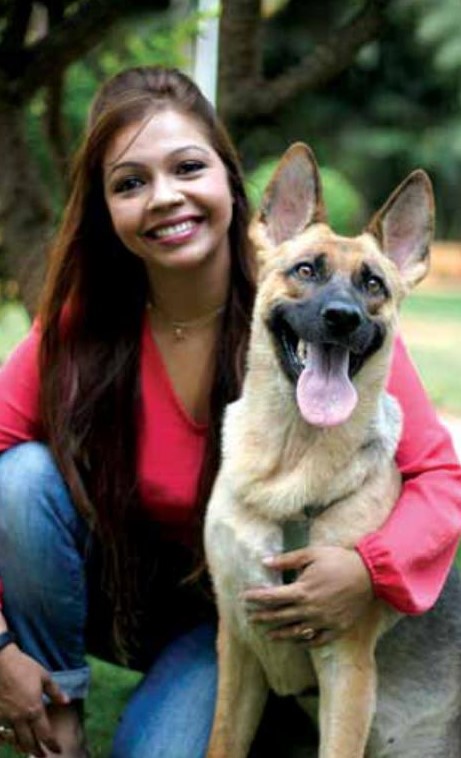
Raima and her pooch Dasho seem to make a picture-perfect duo.
Text: Buddy Life editor Pradeep Verma

Raima Sen has always carried herself with a quiet grace— an actress who doesn’t need to announce her presence, because her lineage and her artistry speak for her. From the luminous legacy of her grandmother Suchitra Sen to her own acclaimed performances in Bengali and Hindi cinema, Raima has carved out a space that is both timeless and contemporary.

But away from the arc lights and applause, Raima’s world is tender, unhurried and filled with the kind of love that only pets can inspire. Her Shih Tzu, Dasho, is more than a companion; he’s family, confidant and comic relief rolled into one furry bundle. Friends say Raima lights up differently when she talks about him—her voice softens, her laughter lingers and her eyes sparkle with the kind of affection that fame can’t conjure up.

In her home, glamour doesn’t vanish—it softens, melts and mingles with gentleness. The bond between Raima and her four-legged companions is more than affection; it’s a living reminder that love, in its purest form, is not performed or rehearsed—it’s mutual, messy, and magnificently real. Buddy Life editor Pradeep Verma in a spirited conversation with Raima Sen.

You welcomed Dasho after years without a dog. How did that decision transform your daily life and emotions?

Raima: We’ve always had dogs — my father always had dogs, but after losing our last one, we decided not to keep any for a while. During the lockdown, I brought Dasho home after 10–15 years. I didn’t know what it would entail, I was very excited and scared at the same time, but it turned out to be the best decision. He has changed my entire life. Raising him from the start made me more caring, more responsible and I discovered how much love I had to give. I almost feel like his mother.

Do tell us more about the origin of his name. Does he live up to it by dashing around, or is he more of a couch philosopher?

Raima: Dasho’s name has its origins in Bhutan. We have a lot of friends in Bhutan. As kids we always used to visit Bhutan for our family holidays and they used to come down. True to his name, Dasho dashes around when he wants a chewy, but mostly he’s a lap baby. Otherwise, he bosses everyone around and makes sure he’s greeted first and played with first.

How does Dasho show that he understands you—are there particular words or gestures he responds to?

Raima: His ears perk up, he nods his head, moves it from side to side and understands everything we say. He responds to favourite words and gestures.

Dasho seems rooted mostly in Kolkata life. Why do you prefer keeping him there rather than making him travel?

Raima: Actually, it’s funny — Dasho hasn’t travelled at all. I haven’t had the chance to bring him anywhere. I go to Mumbai primarily for work. He’s most comfortable in Kolkata with my mom, the building staff, and everyone who adores him. I don’t want to make him travel unless it is absolutely necessary.

West Bengal is often described as “Baro Mase Tero Parbon” (13 festivals in 12 months). Durga Puja and other festivities are steeped in food and tradition. How do you make these festivals special for Dasho — does he get his own kosha mangsho moment?

Raima: “No kosha mangsho moment, but he gets little bits of sweets, roshogullas or pantuas. He loves sweets.”

Having three moms (Moon Moon, Riya, and you) of royal lineage — Dasho couldn’t have wished for more. Who spoils Dasho the most, and what’s the most extravagant treat he’s received?

Raima: All three of us pamper him, but my mother spoils him the most. She gives him everything she eats. We make homemade chewies since he’s allergic to most other things. On birthdays, he gets a little cake or sweets.

Shih Tzus are known to be such velcros. Would you say Dasho is the hook and you’re the loop — and who else in the family does he cling to most?

Raima: Dasho clings to me the most. He plays with everyone, sleeps with my mom at night, but in the afternoons, he comes to me. I think he doesn’t get enough of me since I’m in and out.

Does Dasho ever crash your me time — say, when you’re watching OTT shows or preening your social media avatar? Or, is it the other way around, with Dasho making you feel that you are butting into his me-time?

Raima: We both butt into each other’s metime. When I’m doing yoga or meditation, he jumps on me and kisses me. When he’s napping, I pick him up and cuddle him. It’s mutual mischief.

We’ve heard that apart from walking Dasho, you also take him to pet cafés. How’s the experience for both of you? Any suggestions for upping the quality of service at the cafés?

Raima: Yes, we go to dog cafés in Calcutta. I wish there were more cafés with a variety of food for dogs. Dasho sits quietly beside me, wants my food but gets his own bowl. I’ve taken him to clubs and hotels that allow pets. I take him to Tolly club, it’s great fun.

He looks to be such a pampered doggo on Instagram; does Dasho ever surprise you with mischief—digging carpets, zoomies or pulling the classic Shih Tzu “noodle” trick?

Raima: He’s spoiled and a bully. He bullies the cook for food, bullies me to take him down. He often creates havoc and bullies Rita, the house help to play many games with him and then has his food. He does zoomies daily, creates drama at mealtimes, and no one says no to him.

What’s Dasho’s grooming routine—daily brushing by you, or does he prefer the professional spa treatment every few weeks?

Raima: A dog boy comes three times a week. Once in two months I take him to the parlor, which he hates but it’s good for him.

When Dasho curls up beside you after a long day, what does “home” feel like in that moment—sound, smell and heart?

Raima: When Dasho curls up beside me and snores, it’s the best moment. I’m very sensitive to noise, but his snoring feels comforting. When he snores or puts his head on my chest, there is no greater feeling. He’s the only one who can share the bed with me.

And finally, if Dasho could play matchmaker, what kind of date would he set up for you—and would you trust his instincts?

Raima: Dasho is very possessive. If he had to set up a date, he’d just set himself up with me, locked in the bedroom 24/7. He doesn’t let me talk to anyone without demanding attention first.

Posted on

Kindness knows no Boundaries

Chitra Suresh is a journalist turned public relations professional who is also a community dog and cat feeder. In her book titled And Then He Was Ours! Chitra chronicles the emotional highs and lows of rescue work, reminding us that empathy and small acts of care can ripple through society. Her story is not just about animals—it’s about humanity itself. Buddy Life editor Pradeep Verma in a heart-grabbing interview with Chitra Suresh.

What first inspired you to start caring for community dogs and cats, and how did your journey evolve?

Chitra: My journey began with Angel, our Labrador Retriever, who entered my life over a decade ago. Before Angel, I was terrified of dogs—whether puppies or older ones, I would change direction just to avoid them. But living with her transformed my perspective. Angel taught me kindness and empathy, especially toward the less fortunate animals and birds around us. I realized how vulnerable community animals are—always alert, shielding themselves from harm, and struggling to survive. Yet, when offered love, care, and food, they respond with affection and loyalty, becoming lifelong companions.

The actual caregiving began eight years ago with Princess, a young Indie dog with a leg deformity. Angel protected her from bullying siblings, and eventually, Princess became part of our family. Caring for her daily needs made me realize the countless voiceless souls who deserve attention. That was when I committed myself to making their lives better.

Can you share a moment that shaped your commitment?

Chitra: During the Covid lockdown, we heard dogs crying in our complex at night. Feeders couldn’t step out, and the animals were starving. We explained the situation to authorities and assured them we’d follow all guidelines. With their support, we fed the community dogs and cats. That experience reinforced my belief that caregiving is not optional—it’s a responsibility.

How do you balance the emotional highs and lows of caregiving?

Chitra: Caring for community animals is deeply emotional. They are born defenseless, wary of humans, and slow totrust. Every interaction is a test of confidence. Yet, thejoy of seeing an animal recover from illness or injury isimmeasurable. Daily feeding is not just about food—it’s about reassuring them that someone cares. Even small gestures, like regaining their trust after a scare, remind me of the fragility of their existence. My respect goes to all who selflessly dedicate their lives to these beings.

Congratulations on your book And Then He Was Ours! The book begins with the loss of a rescued Indie puppy. How did that experience change your perspective, and what emotions shaped your writing?

Chitra: Losing Jupiter, also called Makhan, was devastating. Despite researching the farmhouse where he was to be fostered, things went wrong. I learned never to trust assurances blindly and to rely on instinct. Since then, I keep constant tabs on every animal I send for recovery or adoption. Their trust in me is sacred.

Writing about this journey meant reliving fear, guilt, hope, and kindness. None of these emotions were easy, but they are part of being human. At times, I slipped into depression,

fearing we’d never find him. Yet, narrating the story was not just for readers—it was for me, to process the consequences of my decisions. Even now, those emotions remain with me, guiding my caregiving.

What made you decide to publish such a personal narrative, and how do you hope readers will connect with it?

Chitra: The experience was so profound that I shared it with anyone willing to listen. Friends encouraged me to turn it into a book, and I wanted Jupiter to be remembered as a hero.

My goal is simple: kindness toward every living being. I hope the book inspires empathy, affection, and a belief in humanity. If it brings more caregivers into society, it will have achieved its purpose.

You mention the kindness of strangers. Could you share an instance that surprised you most?

Chitra: The tribals in the village where we searched for Jupiter humbled me deeply. Despite lacking basic necessities, they noticed our distress and offered food, water, and reassurance. Local boys even created a WhatsApp group to track sightings of the pup, updating their statuses so the entire community could help. Some mounted bikes to search across nine villages. Their generosity taught me to give more and take less.

What role does empathy play in building stronger human–animal bonds?

Chitra: Empathy and kindness are inseparable. Empathy means understanding another’s emotions; kindness is acting on them. In today’s world, where negative energy often dominates, small acts—feeding birds, scratching a dog’s ear, listening to someone’s pain—can inspire others.

Children learn by observing adults. If we show empathy toward animals, beggars, or plants, children will carry those values for life. Daily acts of kindness build a compassionate society.

How has your work influenced attitudes toward Indie dogs and cats in your neighborhood?

Chitra: Though we’ve faced backlash, we’ve also changed mindsets. By demonstrating coexistence, some people now see that community animals mean no harm—they only seek food and affection. I’ve involved colleagues, security staff, shopkeepers, and residents in caregiving. Some contribute to medical emergencies or meals. These small but significant actions show that change is possible.

What are the biggest challenges you face, and how do you cope with uncertainty in rescue work?

Chitra: The hardest challenge is hatred toward community animals. Some people believe only they have the right to exist, and their vengeance leads to cruelty. Mass culling, encroachment on forests, and atrocities against animals are heartbreaking. Worst of all, parents pass this hatred to children, teaching them to harm animals. That is dangerous parenting.

Rescue work is filled with uncertainty. Fear of failure often overwhelms me, but I push through because I feel I owe it to the animals. I chant, pray, and manifest positivity. I even seek blessings from Angel, my senior pet, to guide me.

Has writing the book helped you process emotions differently compared to daily caregiving?

Chitra: Yes, writing made me stronger. It sharpened my attentiveness to every wagging tail or longing pair of eyes. I chant the Ho’oponopono prayer daily—it lightens me and gives hope that empathy will eventually prevail. The book helped me transform pain into resilience.

What message would you like young animal lovers—and society at large—to take away from your journey?

Chitra: Look around you. I have two pets, one an Indie and the other one Golden Retriever. There is always someone weaker, less fortunate, needing attention. Kindness doesn’t

require money—it can be a gesture, a word, or an act of care. Sharing and caring are beautiful. Be kind, selflessly, without expectations. Toward animals, humans, birds, plants—toward everything that exists. Kindness is the greatest gift we can give back to society.

Do you see yourself writing more stories in the future?

Chitra: Absolutely. And Then He Was Ours! Has encouraged me to write more about community animals and birds. Their world deserves to be captured and shared. Some caregivers have approached me to narrate their experiences, and I would love to author or co-author such stories. Every tale of caregiving adds to the collective voice of compassion.

Posted on

A Heart That Beats For The Voiceless

They healed me and I healed them back, says Jaya Bhattacharya, the Kunti of tele serial Mahabharat. The actor, in a deeply personal conversation with Boishali Sinha, reminisces how her fear of dogs turned into compassion for them.

Known for her powerful performances in television and films, Jaya Bhattacharya is equally well-known off-screen for a different kind of heroism — her compassion for animals. From being terrified of dogs to running her own animal welfare NGO, Thank You Earth, Jaya’s journey is a story of transformation, courage, and unconditional love. In this interview, she opens up about how her bond with dogs changed her life, inspired her activism and continues to define her purpose — both as an artist and as a human being.

You’ve often spoken about your affection for dogs. Could you share where this love for them began in your life?

Jaya Bhattacharya: Believe me when I say I was utterly scared of dogs as a child — I really was! I remember vividly, a mother dog was eating from the garbage on the roadside and I walked too close. She leapt at me, her paws reaching my shoulders — I was barely six or seven years old. My father, who was a dog lover, actually saved me that day.

After that, I avoided every house with pets. But my father never allowed me to shy away — he took me to meet well-trained dogs, teaching me not to fear them. Still, I was so scared that when I had the option to stay with my bua (aunt) who had a dog, I chose a hostel instead!

Then, in 1998, fate brought Kali into my life. She forced her friendship on me. When her puppies were cruelly taken away, she brought their lifeless bodies to my home — a heartbreaking moment that opened my eyes. Soon after, the BMC took Kali away due to complaints and she never came back. Searching for her changed me forever. Her loss carved a space in me that still aches, but it also planted compassion in my heart.

Kali taught me that love does not always come softly. Sometimes it shakes you, scars you and then makes you whole.

What role do your dog’s play in your daily routine and emotional well-being?

Jaya Bhattacharya: Caring for dogs taught me to care for humans too. I became more empathetic, started seeing what others ignored. Fighting for animals gave me courage — even in dangerous situations, I stopped fearing for my own life.

The love and strength I have gained from animals have made me fearless. Knowing this power has helped me stand tall and smile even through the darkest phases of my life.

As an actress, your schedule can be demanding. How do you balance work with spending quality time with your pets?

Jaya Bhattacharya: Truth be told, I no longer have ‘quality time’ with pets in the usual sense. My life’s work is about serving them. I run an NGO called Thank You Earth, a medical centre for sick and injured animals. We’ve even rescued a horse who now lives safely on a friend’s farm. My dream is to build a 24/7 free medical facility and sanctuary for stray animals. That’s why I continue working as an actor — to fund that vision.

I won’t die before doing this. That’s my promise to them — and to myself.

Have your dogs ever influenced or inspired your work as an artist?

Jaya Bhattacharya: Absolutely. Once, while performing the role of Kunti, I was grieving the loss of my beloved dog, Begum. I hadn’t cried till then. But in that scene, where Kunti realizes she’s lost her son Duryodhan, I poured all that pain into my performance. Even after the scene ended, I couldn’t stop crying. That was Begum’s love — helping me feel again. My dogs have been my greatest teachers in empathy and expression.

What makes the bond between humans and dogs so unique?

Jaya Bhattacharya: Humans live with endless expectations — it’s never enough. Dogs expect nothing. Even street dogs, if left alone, won’t come near you until they trust you. But once that bond is made, they’ll wag their tails every time they see you.

Humans can betray. Dogs never do. Their loyalty is pure, unshakeable, divine. “To betray a dog, in my view, is the greatest crime mankind can commit.”

Many celebrities adopt or rescue dogs. Do you personally advocate for adoption over buying?

Jaya Bhattacharya: Always. I have never bought a dog in my life — and that says it all. After Begum passed, I began adopting abandoned senior dogs. Today, I share my home with six — two Indian breeds and four rescued seniors. At Thank You Earth, we care for 38 dogs and cats. Each one is family.

What are some of the biggest challenges you see when it comes to dog welfare in India?

Jaya Bhattacharya: Dogs in India are among the most ill-treated animals. People feed them during festivals or for astrology but otherwise, they’re neglected and often abused. Awareness and compassion are still missing — that’s the real battle.

If given the opportunity, what kind of initiatives would you like to support for improving the lives of stray or abandoned dogs?

Jaya Bhattacharya: In 2007, Justice Radhakrishnan suggested that every residential building should adopt two stray dogs. I think it’s a brilliant idea. It would give dogs shelter, safety and food — and in return, they’d protect their area instinctively. It would also sensitize residents, teaching them empathy and I run an NGO called Thank You Earth, a medical centre for sick and injured animals.

Looking ahead, do you envision creating a personal sanctuary or collaborating further with NGOs?

Jaya Bhattacharya: That’s the dream. My goal is to build a farm sanctuary and a 24-hour medical facility for strays. I’m already working toward it through Thank YouEarth. Every rupee I earn from acting goes into that vision.

Finally, if your dogs could speak, what do youthink they’d say about you?

Jaya Bhattacharya: They’d probably say, “She’s notperfect, but she’s ours.” And maybe, “We healed her, and she healed us right back.

Posted on

A Tale of 22 Rescues

Happiest in court, a patriot, passionate about animal rights, cricket, music, oil on canvas art and theatre — meet senior advocate Percival Billimoria, who has 23 dogs and all except one, are rescue cases.

Were you raised in a family which appreciated and adored animals? Have you always had a canine companion at home?

I grew up in Bombay and my very first dog was a spitz called Honey. I still remember her as a very intelligent and perceptive dog. She made me realise that once people live with dogs they come to love them very much. Living in a joint family, my aunt was horrified when Honey was brought home. But soon she refused to let Honey get out of her sight.

Please tell us about your dogs.

My next dog was Trixie-baa, an Irish setter. By this time, I had moved to New Delhi and my mum came to live with me after my father transitioned. Trixie-baa lived to a ripe old age and became my mum’s constant companion while I was burning the 2 am oil at work. Now I have 23 dogs and all except one are rescue cases. All females have “baa” as a suffix while the males are “boos”.

We have learnt that you take them for morning walks at the crack of the dawn. Apart from it, what does a typical day look like in your household? Are there quiet evenings that anchor you?

You heard wrong. The 2 am oil became 4 am oil. My work is very challenging but fortunately, I have good staff to take care of the brood. This means that they are taken to the vet regularly, vaccinated and get their meals at regular hours. There’s a dog house for them though they are in any case all over the home. Some of them take turns sleeping in my bed.

How do your pets shape or disrupt your rhythm—do they force pauses, or offer perspective?

The only time that I get distracted from my work is when one of them is unwell. The one perspective which everyone should learn is that although they are voiceless, they know how to communicate. Also, each one has a different personality. This becomes so apparent when you have more than one. They sense your mood and react accordingly. This is because dogs – in fact all animals – are sentient beings. The Western perspective was to consider all animals as “beasts” and for centuries it was man vs beasts. In India we have always taken care of animals. There is a wholly erroneous notion nowadays that keeping pets is a hobby for the elites. But if you look at street dogs, they are taken care of by the local presswallah or shopkeeper or the watchman. Very often I find that it is the poor who share their meagre meals with dogs or cats.

I have long since realised that all living beings have a soul and while any kind of meat was never a part of my diet, I used to enjoy tandoori chicken in Delhi. One day I just made up my mind and stopped having chicken as well. Sea food remains an integral part of my diet.

How does your pooch react when you return from a long tour?

Dogs inherently greet you by standing on their hind legs, as if they are hugging you. I hug back. This happens every day when I get home. They scramble over each other to be the first to greet me in this manner. Unfortunately, people who don’t understand this get spooked and say they are “getting mauled”.

Do you groom/ bathe your fur baby? What part do you play in grooming?

Again, the staff bathe the dogs regularly and are responsible for their upkeep. I only supervise with an excel sheet which lists their dates for their regular vaccines. Recently, I rescued a dog which was abandoned at the Simla railway station. She has long hair which had become matted and it was quite a job to get her squeaky clean with her silky fur again. There is a grooming place where they are taken. One of the older cars is devoted to taking them to the vet and for grooming.

Are they allowed on the couch and most importantly, the bed?

Dogs are family. They are devoted to you and of course have the full run of the place. Many nights I have two or three on my bed, except if I am likely to come home very late when I tell the staff to keep an eye till I return or else let them just sleep.

Do you play with your fur babies? What is their favourite game?

There’s one guard whose main job is to play ball with the ones which have a lot of energy to expend. One of the main criteria for selecting staff at both my home as well as my chamber is that they must be animal lovers. And preferably vegetarian, though this criteria is getting to be hard to fulfil which is extremely unfortunate.

Have you ever taken your fur babies for vacations or picnics? If yes, how was the experience?

Some dogs get car sick but recently during the summer holidays I did a road trip to Udwada which is a place of pilgrimage for Parsis. My mother, before she passed away, was very keen that I should go. One of the precious ones who enjoys car rides came along. He was a good passenger and endured the long journey very well.

Who amongst your fluff balls is the Enfant Terrible? Does he/she manage to mess with your Zen?

All pups are playful and tend to chew on things. The legs of my breakfast table in the kitchen have been chewed off. Because when a dog is being introduced into the brood he/she has to be in the kitchen where the staff can keep an eye on the introductions.

Where do you draw the line when it comes to pampering them with treats? What is their favourite food and treat?

I do not encourage them to beg for food at the dinner table. They are used to the fact that they will not get a single morsel. It’s habit forming if you give them food from your plate and I don’t believe it’s even healthy. Moreover, when one is entertaining it gets embarrassing if one of the clients or guests are uncomfortable.

Unfortunately, you can’t make everyone love dogs – although I really pity those who don’t since they will never experience how delightful it is. Otherwise, the day when I rescued the fur ball is noted in my excel spreadsheet as his/her birthday and a doggy cake is ordered.

You’re known for your intense work ethic. You have put it very bluntly and we are paraphrasing here: There is no such thing as work-life balance in the profession of law; if you are looking for it, then choose another profession. How do you think pet ownership offsets the absence of this balance?

The law is a jealous mistress and demands focus and attention. So yes, anyone who wants to pick up his tiffin and leave for home at 6 pm is a misfit in the profession. However, it is always possible to make time for other passions of life such as painting, or cooking. I have always exhorted junior members of the profession to work hard and also play hard.

It’s just that it can’t be scheduled in advance. I know my schedule generally for the day and the next day but find it difficult to commit to anything for the day after. One simply does not know.

Pets are always there for you no matter what time you get home. They are always happy to see you. At the very least, watching them reminds one of the simple things in life – food, water and sleep. Taking care of a life has its own rewards.

Do you ever find that your dogs respond to your moods or stress levels, in ways that surprise you?

Any family with a dog will tell you that pets absorb the mood in the home. They know when there is a lack of harmony and they absorb the negativity to the detriment of their own health.

This is why many families with pets will say that dogs take the disease on themselves. Illness is nothing but negative energy and pets absorb that.

You have always supported Animal Rights vociferously. Your pointing out the absence of In Loco Parentis defense in the recent judgement on stray dogs, is reminiscent of Al Pacino’s explosive assertion of In Loco Parentis in the  movie, ‘Scent of a Woman.’ Could you please explain it for the benefit of our readers?

One of the several doctrines in common law is that of “Loco Parentis”. In layman terms it means that when a litigant cannot speak for itself it can be represented by someone. There are decisions of two High Courts which have applied this doctrine to animal rights. These have been stayed by the Supreme Court but a stay does not mean that it is overturned. It only means it is held in abeyance till the case is decided.

Do you think the way we treat animals reflects something deeper about our cultural or moral compass?

I don’t enjoy the fact that many of the fur babies live on the streets. But the only solution is sterilisation – known as “ABC” (Animal Birth Control). Putting them in pounds would be devastating. And in any event, one will need to sterilise those held in pounds as well.

Unfortunately, you can’t get everyone to love dogs. However, there is a dog meat lobby which is pushing the narrative that dogs are dangerous. This narrative is being propagated by some media houses in the same way that they would market a new brand of toothpaste. The data being cited is false and outdated and even contrary to the Government’s own data.

Western countries which are being held up as model cases, have in fact evolved from the “man vs beast” narrative to one which recognises all animals as sentient beings.

Cruelty abounds, despite many scientific papers which demonstrate that most hardened criminals started with cruelty to animals. The part of the brain responsible for empathy can malfunction and it is important to recognise the link between animal cruelty and serial killers.

Posted on

Sharing Family Bond With Animals

In the home of Dhirendra Singh, the MLA of Jewar, love for animals isn’t just a gesture—it’s a way of life. The family shares a deep, genuine bond with both stray and pet animals, treating them not as outsiders, but as cherished members of their household. It is a common sight to see his wife gently feeding their pets. The fur babies roam freely and dwell peacefully within the premises. What is most heartwarming is that children are growing up in this nurturing environment, surrounded by animals, absorbing compassion, responsibility, and empathy. The home resonates with a sense of shared belonging between humans and animals—a beautiful ambience where kindness is lived, not taught, and where love for the voiceless is naturally woven into the family’s values. Boishali Sinha unveils a treasure trove of poignant insights as well as deeply thought-provoking observations in this exclusive interview with Dhirendra Singh.

Buddy Life: What first sparked your love for dogs? Was there a special moment or pet that started it all?

Dhirendra Singh: Growing up in a farmer’s household, animals were not just part of life—they were part of the family. In our fields and homes, ghee, doodh, dahi, and the presence of animals like cows, buffaloes and of course, dogs, shaped our way of living. Dogs especially held a unique place—guarding our homes, playing with the children and often being the first to understand our mood.

My bond with dogs began early, but over the years, it has grown into something deeper—a truly symbiotic relationship. Dogs don’t ask for much, just a little care, and in return they give their full loyalty. That kind of unconditional companionship leaves a mark. Today, I live with eight dogs, and our home is always open to strays, whom we take in as part of our extended family. My love for dogs has never been about owning them—it’s about living with them, understanding them, and sharing space with dignity and mutual respect.

Buddy Life: Could you tell us about your dogs and other animals and what they mean to you?

Dhirendra Singh: Yes, I currently live with eight dogs, many of whom were once strays. I also care for a larger ecosystem of animals—25 Indian stray dogs, 12 cows, 12 buffaloes and a few ducks. These animals are not just part of the household; they are co-dwellers in our shared space.

They teach my family and others in the community the values of compassion (Daya), non-violence (Ahimsa), and Prakritik Jeev Naitikta—the natural ethics of coexistence. Every morning, without fail, I walk with my dogs. It’s a ritual that centres me amidst the responsibilities of public life.

We have also set up a shelter for dogs in Jewar and support NGO-run vaccination drives to ensure stray animals receive proper care. In fact, I’ve been sharing videos on social media to promote kindness toward animals, inspiring especially the youth to view animals not as voiceless creatures, but as sentient beings deserving empathy.

Our family believes in adopting and not shopping. We always recommend Indian breeds, which are more adaptable and naturally resilient. This lifestyle is not only a way to give back to nature, but it also promotes ecological balance, which is especially important in rural and semi-urban communities like ours.

Buddy Life: How do you balance your responsibilities as an MLA with spending time with your canine companions?

Dhirendra Singh: Public service does have demanding responsibilities, but caring for animals is not a task—it’s a natural extension of my daily life. My day starts early, and it always begins with a walk with my dogs. That quiet time grounds me. Even amidst meetings, rallies, or legislative work, I make sure that the animals under my care are looked after, whether through the team that manages the animal shelter and the NGOs we partner with. It’s about creating a lifestyle where your duties and your values coexist—wherecaring for the voiceless is not seen as different from serving the people.

Buddy Life: Are there any particular breeds you are especially fond of, and why?

Dhirendra Singh: I have deep admiration for Indian dog breeds, especially strays and native village dogs. These breeds are hardy, low-maintenance and highly adaptive to our climate and terrain. More importantly, they are incredibly intelligent and intuitive. I always say, “Don’t underestimate the desi breeds—they’re not just survivors, they’re natural protectors and lifelong companions.” These dogs are less prone to illness, are emotionally resilient, and perhaps most importantly, they often have a story of a past struggle – which makes every adoption even more meaningful.

Buddy Life: Have your interactions with dogs influenced your views or actions in public service or policy making?

Dhirendra Singh: Absolutely. My work with dogs and other animals has taught me patience, empathy and the importance of silent service. These lessons influence how I deal with people, especially the marginalized and underserved. We’ve supported several vaccination drives, helped set up local shelters and worked with organizations that promote animal rights and ethical treatment. I believe that how we treat animals is a direct reflection of our values as a society—and this thinking does guide my approach to governance.

Buddy Life: What do you think society can learn from dogs in terms of loyalty, companionship and unconditional love?

Dhirendra Singh: Dogs teach us what even textbooks can’t—loyalty without any conditions, presence without pretence and love without limits. In a world driven by self-interest, a dog reminds you of the beauty of selfless living. Their emotional intelligence is remarkable—they can sense your mood, your silence, even your sorrow. I’ve often said, “A dog doesn’t need your money, status or words—they just need your presence. If we could mirror even 10% of their emotional honesty in our human relationships, the world would be a kinder place.

Buddy Life: Have you ever supported or introduced initiatives for animal welfare, especially for stray or abandoned dogs? 

Dhirendra Singh: Yes, several. We’ve established an animal shelter that houses dogs, cows and other abandoned animals. We conduct regular medical camps and vaccination drives with the help of NGOs and local veterinarians. Beyond infrastructure, I try to lead by example—whether it’s sharing stories on social media, feeding animals on the roadside, or encouraging school children to show kindness to strays. I believe in a cultural shift, not just a policy push and for that, Jatak Kathas like the Khargosh aur Kachua offer timeless moral stories that still resonate deeply and can be used to instil animal empathy in children.

Buddy Life: How do you think local communities and governments can work together to improve the lives of stray dogs?

Dhirendra Singh: The first step is to see them not as a problem but as co-dwellers of our habitat. Municipal bodies must work with NGOs, local schools and housing communities to promote adoption, sterilization and vaccination. Creating safe shelters, ensuring clean water and food zones and sensitizing citizens through education, all can make a huge difference. The government’s role is to create policy frameworks and allocate funding but real change happens at the community level—when people take ownership and act with compassion.

Buddy Life: Do you believe dogs and pets, in general, can positively impact mental health, especially for those in stressful environments?

Dhirendra Singh: Without a doubt. In today’s world, where anxiety and loneliness are widespread, dogs offer a kind of therapy that no medicine can match. They listen without judgment, love without expectation, and respond without ego. For the elderly, for children, and even for public servants like me who often deal with immense pressure—a wagging tail and silent companionship at the end of a long day can restore peace. It’s a gift beyond measure.

Buddy Life: Lastly, if you could send one message to encourage more people to adopt or care for dogs, what would it be?

Dhirendra Singh: Adopt, don’t shop. Love, don’t fear. And remember, kindness to animals is kindness to ourselves. Our Indian stray breeds are resilient, affectionate and deeply deserving of love. Giving a home to a stray isn’t charity—it’s an act of shared dignity. These animals remind us that nature and compassion for all living beings must coexist. Start small—feed one dog, offer water during summer or simply let a stray rest peacefully near your home. These are small actions, but they shape a kinder, more balanced world for all of us.

Posted on

Pets Need Safe Homes & Clean Floors

Keeping your pooch healthy is a constant concern of every pet parent. Team Buddy Life in a lengthy talk with Sameer Satpathy, Divisional Chief Executive, Personal Care Products Business, ITC Limited. Sameer is an avid animal lover with two puppers at home who keep him busy and well entertained when he is back from work.

Have you always had a pup at home? were you raised in a family of animal lovers?

Yes. We always had dogs while growing up. We also had fish, rabbits and a tortoise at various points of time!

What are your earliest memories of having a pooch around?

some of the fondest memories were playing with my dog, Timmy, in our lawn, chasing it around while growing up. Timmy also used to drop me to school and find his way back home every day. Those days we never put them on a leash.  

How and when did you get your present fur baby home?

We got shiro home during the pandemic. animals, especially dogs are always a source of joy and happiness. In covid times, they helped cheer up the family, especially my girls.

In your busy schedule, do you get the time to groom or bathe your pupper or the children are more happy doing it? what part do you play in their grooming?

When you bring a pet into your home, they become a part of your family and deserve your time and attention however, balancing a busy schedule along with being a pet parent can be quite challenging. My family really does take up a lot of the hard work, with supervising their overall well-being.

While my children absolutely love taking care of shiro and nugget’s grooming needs, I try to make some time to participate actively in this process on weekends. These moments are precious and allow me to connect with shiro and nugget often.

Are they allowed on the couch and most importantly, the bed? does your pooch sleep in your room or in the kids’ room?

When my daughters are in town, shiro and nugget sleep in their room, otherwise they sleep in my bedroom.

How do you balance the need for a clean home while ensuring the products used don’t adversely affect your pet’s health?

As pet parents, we take care of our pets needs when it comes to food, nutrition, fitness, etc., but one thing that often gets missed is the need to ensure a safe and clean home for them to live in. I am extremely discerning while selecting any products we use for shiro and nugget, or for home cleaning. Pets, like children spend majority of their time on floors. safety begins here.

If we look at the home cleaning category, there are not too many pet safe cleaners in the market, that are accessible to the general public as well. Which is why we developed ITc nimyle; a pet-friendly floor cleaner made with neem. nimyle is a neem-based floor cleaner which delivers 100% natural action* with 99.9% germ protection*. It is free of chlorine, bleach, sulphates, phosphates and quats and it also does not leave behind any chemical residue^, making floors safe for pets. nimyle’s formula is readily biodegradable** as well.

I also ensure that any cleaning and grooming products are stored safely out of shiro and nugget’s reach. Furthermore, we maintain a regular cleaning schedule to keep our home hygienic and safe, and our pets well-groomed and comfortable.

As someone who understands the importance of maintaining a safe environment for pets, what advice would you offer pet parents when it comes to their daily cleaning routines? how can products like itc nimyle play a role in ensuring a balance between hygiene and pet safety?

Pets are like children, they have special needs and requirements. They bring us so much joy and happiness which is why we need to be careful about the products we use for them. This is where nimyle comes in.

Keeping a safe and clean home environment is where this care begins. Floor cleaners play a crucial role in home care especially for homes with pets as most of their time is spent on the floors. shiro and nugget enjoy their zoomies and playtime on the floors and that is why I use neem based, nimyle for cleaning our house. neem has been a centuries old ingredient, a natural anti-bacterial, and its use in home care has been credited through the ages.

The idea was to create a high quality, pet-friendly solution, which is also accessible and available to consumers at a large scale, solving their purpose. nimyle’s 100% natural action* and no chemical residue^ properties make it a pet-friendly solution.

As a pet magazine, our readers are always looking for products that ensure their pets’ safety. since we are talking about itc nimyle —could you elaborate on what makes it a standout choice for pet-friendly households? What aspects of its safety and efficacy do you believe make it particularly ideal for pet owners?

Every pet home needs pet-friendly products. With rising awareness about this among pet parents, the need for natural and safe products is also increasing. We have tested nimyle rigorously with our R&D to be able to deliver a product that leaves no chemical residue^ behind and also protects with its 100% natural anti-microbial action*, making floors safe for pets.

Where do you draw the line when it comes to pampering them with treats? what is their favourite food and treat?

Pampering shiro and nugget with their favourite treats is always a joy, especially. While I love to spoil them occasionally, I’m mindful of not overdoing it. Treats are usually given when we are training them.

Both shiro and nugget are quite the foodies and we usually feed them home cooked meals – chicken and rice or dahi chawal. shiro, has recently taken a fondness of munching on some of the garden plants. He’s the only dog I have seen who enjoys them so much! as for nugget, loves small training treats, which are perfect for rewarding him during our training sessions.

Do you play with your fur baby? what is his/her favourite game?

Both my dogs are quite playful. I do enjoy spending time and playing with them regularly and taking them for walks in the garden. Every day, shiro and nugget wait eagerly for me to come back home from work. They seem to know exactly when I’ll arrive, and without fail, they’ll be waiting near the door with their tails wagging.

It’s a joy to come home to such playful dogs. Their energy is contagious, and it’s great to end a day with them next to my bed. Their favourite game is definitely fetch—they never seem to get tired of chasing after a ball. But honestly, they’ll go after just about anything that moves! Whether it’s a leaf blowing in the wind or a random object they find, their enthusiasm for chasing and exploring is endless, especially on our walks along the garden under our home.

Have you ever taken your fur baby for vacations with you? if yes, how was the experience?

No, not yet.

Who is your pet’s favourite person in the family?

It would have to be my daughters. shiro has spent a good amount of time with both my girls and nugget was just adopted by my younger one as a pal for shiro since she was off to university. So yes, the kids are definitely their favourites.

Have you ever adopted or supported a rescue or homeless pup?

Yes, we have! We brought home nugget, our Indie a few months ago and adopting him has been one of the most heart-warming decisions we’ve ever made. It was actually my daughter’s idea. When he first came home, she was a shy, uncertain little pup, but with time, love, and patience, she’s blossomed into a fun and affectionate companion we adore today. What’s been even more beautiful to witness is the bond he’s formed with shiro. From the moment they met, it was clear that shiro had found his buddy. Even though shiro is older, the tough guy in him comes out now and then as Nugget annoys him with his antics! They’re always goofing around, chasing each other, and occasionally getting into little “siblings” fights.

Do you see yourself as an animal lover? have you ever come up for animals that need to be adopted or spoken of animal rights?

Yes, I have grown up with animals around. They bring so much love and affection into our lives, having them around is truly a joy. My second dog, nugget is an adopted pup. We got her from a shelter a few months ago, and she has been with us ever since.

What’s that one quality that makes a pupper so endearing to you?

A dog’s capacity to love unconditionally is truly remarkable. no matter how your day has been, they are always there to greet you with a wagging tail and a cheerful demeanor. They don’t judge or hold grudges; they simply offer their unwavering companionship and affection. Both our dogs embody this trait beautifully. Their constant companionship and endless affection have brought immeasurable joy and comfort to our lives, especially with my daughters.

Who looks after your pooch when he/she falls ill?

Any favorite vet? Pets are like any other member of the family, and my two dogs keep us all on our feet. Whenever they’re ill, the whole family comes together to take care of them.

There are many stray dogs and cows roaming the streets. do you think the public and the government should consider building a shelter for these creatures in the near future?

As a society, we have a collective responsibility towards the welfare of these creatures who often face harsh living conditions on the streets. shelters could improve their quality of life by providing them with basic necessities such as food and medical care. However, it’s also important to maintain such places and ensure that they are run ethically and compassionately.

  • 100% natural anti-microbial action basis lab study
  • Basis lab study. Use as directed on pack
Posted on

A Legacy of Love and Loyalty

Mohit Mishra delves deep into Ratan Tata’s indelible bond with dogs.

In a society focused on business and achievement where few shine as models of both prowess and genuine empathy, Ratan Tata stands apart as an industrialist and philanthropist who spearheaded the Tata Group with visionary passion. While numerous accounts highlight his business acumen and impactful leadership, Tata’s abiding affection for dogs has resonated deeply with admirers. During his passing away on October 9, 2024 at the age of 86 years, there was a sense of affection that was truly moving to witness after his death. One heart-warming moment at the funeral was seeing his dog Goa sitting calmly next to his coffin and steadfastly staying by his master’s side without any intention of leaving. The image of Goa, a black dog with white markings, beautifully captured the intense emotion of that moment—a powerful reminder of the unspoken connection between humans and animals.

The Story of Goa

Goa was no ordinary dog, he was picked up from the streets of Goa. It was his luck that he started walking behind the industrialist since he sensed some kindred spirit within him. While others would have petted the dog and moved on, Tata took the dog home and named him Goa. He brought him to Mumbai and for the last 11 years, Goa has been a constant companion. He lived in the legendary Bombay House with Tata which was also the headquarters of the Tata Group.

Bombay House

Perhaps the most heart-warming relationship that Tata had with the dogs was seen in the transformation that he brought to Bombay House. The structure, built in 1924, had long been the corporate headquarters of the Tata Group. But in 2018, under Ratan Tata’s ideal leadership, the building underwent a major renovation. It wasn’t merely about modern offices or more comfortable workplaces for the employees. Bombay House was an abode for stray dogs, for whom there was an especially constructed kennel and an area created with special care for them.

Tata’s decision to introduce strays into the daily scenario of Bombay House was not just a boon it spoke of his faith in compassion and being inclusive. Employees at the Tata Group spoke about the special bonding that Tata had with these dogs, most of whom he had personally adopted. The dogs, like the industrialist himself, became essential to the building with their loyalty and quiet presence.

Loyalty over Accolades

Tata’s devotion to his dogs extended far beyond merely adopting strays, hitting the very core of his ideals. One such incident occurred in 2018 when Tata was due to receive a Lifetime Achievement Award from the British Royal Family. The event was set to be attended by Prince Charles (now King Charles III) and all arrangements were in place for Tata’s grand honour. But in a move that surprised many, Tata called off his visit to the UK at the eleventh hour. The reason was one of his dogs, Tango, who had fallen ill. “I can’t leave him and come”, Tata had explained, as he chose to remain by his pet’s side rather than attend a royal ceremony. This incident perfectly captures Ratan Tata’s priorities. For him, loyalty was not a concept limited to business or human relationships. It extended to his dogs, for whom he was always willing to make losses. It was a value deeply embedded in his life, from choosing to adopt strays over expensive breeds to caring for them as members of his own family.

Rata and His Social Media

Tata didn’t shy away from sharing his love for dogs on social media. His Instagram was a window into his private life and there were several posts dedicated to the pets. From pictures of him cradling a puppy to heart-warming messages about the joy animals bring, Tata often used this platform to raise awareness about the importance of adopting stray dogs.

In one such post, Tata shared a picture of a dog with the caption, “Of all the different sufferings that animals today have to go through, my heart truly breaks for the ones that get abandoned by families…” And not just dogs, he was raising awareness for various types of animals in trouble like stray cats, elephants, etc.

Tata’s use of social media to promote pet adoption resonated with many, particularly because it came from someone as influential as him. His message was clear: every animal, regardless of its background or breed, deserves love and care. Stray dogs are often viewed with disdain in many parts of the country and while there are numerous efforts to improve their treatment, Tata’s public advocacy gave the cause a powerful boost.

Through his social media platforms, particularly Instagram, Tata reached millions of people, many of whom may never have considered adopting a stray dog before. His posts were simple yet heartfelt, urging people to choose kindness and adopt animals that needed homes instead of purchasing from breeders. These posts often included photos of Tata with his dogs, sharing personal stories of joy and companionship, reminding the world that even the most powerful and successful individuals can find solace in the love of a pet.

A Wider Social Movement

Ratan Tata’s love for dogs and his advocacy for the rights of animals never stood alone. His action was just a reflection of the general movement in India towards making amends with the issue of stray animals, primarily dogs that are otherwise neglected or ill-treated. Though numerous NGOs and activists are fighting the cause of animal welfare in India, what was more needed was visibility brought through the influence of Tata, a corporate icon.

Tata collaborated with animal welfare organizations to support food, shelter, and medical care for stray dogs. He stressed the concept of corporate responsibility in this area by promoting the integration of animal welfare as a part of CSR (Corporate Social Responsibility) in the business world. His legacy is so deep because he did the right thing by aligning personal values with professional influence in a meaningful way to bridge corporate India and social causes.

His voice was also loud on personal investments in environmental issues. Tata was interested in green technology and sustainable practices. He believes in projects that minimize human interference with the environment. His interdependence sense to all forms of life governed his protection efforts not only of animals but the entire world.

The Legacy of Passion and Compassion

 This commitment towards compassion only deepened in his old age as he began to withdraw from his corporate life. His love for street dogs became even more visible as he spent more time in his residence and the places he visited regularly, always ensuring that needy animals were cared for and protected. In doing so, he reflected an understanding that corporate success and social responsibility must go together with empathy and a feeling that extends to the lowest and most vulnerable of living creatures.

This will be a powerful reminder from Tata: greatness is not just about professional accomplishments but also about the manner one leaves his mark on people’s lives and that of animals. Silent acts of kindness proved for him the difference between good leaders and simply profitable corporate winners, with the former having less to do with profit margins than how the world might be better for all.

Goa’s Silent Goodbye

Tata’s death has left behind a legacy much more extensive than that of the industrialist and philanthropist. His life is a reminder of greatness not from what one does but in the good that one extends to others—human or animal. Doing what he did, Tata inspired thousands of people to view animals, especially stray animals, as being loved and cared for just as he did.

Goa’s quiet watch was a reminder of the deep bond between humans and their pets, a bond beyond words and actions. In Ratan Tata, these values have reflected themselves, be it affection, devotion, or a deep veneration for all living beings. This silent moment with his dog during the mourning of the corporate giant is the essence of Tata’s legacy: a legacy of love, loyalty, sympathy, and welfare forever. As the dog silently sat beside Tata’s dead body, there was the feeling of completion, a well-lived life. His legacy of love and loyalty will continue until the very end, and also beyond the rainbow.
*Some images from the Google

Posted on

EVERY POOCH HAS A HEART OF GOLD

Popular actor and model Tanuj Virwani inherited his love for pooches from his parents and counts them as his extended family. Text: Team Buddy Life

Were you raised in a family which appreciated and adored animals? Have you always had a canine companion at home?

Yes I have been raised in a family that has always appreciated and adored animals. We have been pet owners all our lives. My mom had 9-10 dogs when she was in Chennai. My dad also has had many German shepherds over the years. We too have had Alsatians, Dalmatians, Labradors and many more. I think it is very normal for us to be around doggies and they have always been an extended part of our family. They give us a lot of joy and the house feels empty when we don’t have our canine companions around us.

What are your earliest memories of having dogs around?

My earliest memory would be around the time when we used to live in Juhu. My father would take me to the beach and even our Alsatian would come for a run with us. We would keep him free and we would run together. The mission was to keep up with the dog. Also, I was a little on the healthier side back then and they wanted me to lose some weight. So, this sort of playful competitiveness was really very good. I also remember he was a very naughty dog. He would bark and at the same time, sit on the lap of the guest’s at home and wag his tail. It was lovely. Also, i believe that when you grow up in an environment around animals, you become more emotionally steady. They can’t speak directly in human language apart from their barks, sounds and eyes. So, over a period of time, when you get to understand what they mean and what they speak, it overall plays a big role in shaping your character and personality.

How and when did you get your present fur baby home? Are there other pooches to keep her company?

Our first dog was an Alsatian and he was gifted to us by a family friend. We have had a history of owning race horses from my dad’s side of the family. I remember when my dad got the gift, the little Alsatian had come home in a cute, little basket wearing a bow down his neck. In those days, we only had one dog because it’s a full-time job and they need to be taken proper care of. However, slowly and steadily, we got the confidence to handle multiple pets and that’s when we had a Lhasa. After that, we have been on a roll and have had a lot of Labradors back to back. A lot of white Labradors and now recently, we also have a number of black Labradors.

Do you groom/ bathe your fur ball? What part do you play in grooming?

Yes of course. I believe grooming is as important as playing with them. They need to look forward to it. In our house, our dogs love getting oiled, sponged, and get their nails done. They even like going to the parlour and sometimes, the kind of 5-star, VVIP treatment that they get, even I don’t get at my home. Jokes apart, it fills your heart with so much of joy because when they are clean and fresh, even they are very happy. Their tail is constantly wagging and it’s a lot of fun. The only thing with Labradors and some of the other dogs is that they shed a lot of hair especially around summer. So, one needs to be extremely mindful of that.

Are the pooches allowed on the couch and most importantly, the bed?

In our home, our dogs are allowed anywhere and everywhere. We don’t worry about the fact that they make the sofa or bed dirty with things like mud in their paws and other stuff. In fact, I recently got married and my wife has also been a pet parent. She understands how things are but right now, she has to be very careful and hence, she’s got this vaccum cleaner at home. Every night, she’s obsessed with cleaning the bed and everything after the furry babies have left the bed. I think it’s the most beautiful feeling if you can go to bed cuddling your buddy and waking up with them in the morning. The first slurpy display of affection from them at f in the morning is so nice. Their love is pure, unconstitutional and unadulterated. In fact, human beings can sometimes be a little selfish since they have stakes attached. But the love of animals, especially dogs’ is always so pure and unadultereted always.

Where do you draw the line when it comes to pampering them?

I personally feel it is important forthe pet parent to be held accountable. For example, the pooches have a set time of going for a small loo and big loo. But sometimes, they end up urinating and pooping inside the house which they need to know is wrong. Of course, it can be understandable when they are small puppies. But as they grow, they have been trained and hence they need to know that there will be consequences. We scold them and punish them. By and large, we haven’t had much issues. Yes, sometimes during monsoon, they aren’t able to go much outdoor and hence it might become a slight issue. Also, once old age kicks in, they have less control over their bladder. However, I think that it is important that without hitting them or being brutal or mean to them, we should let them know that this is not right. They are very intuitive and they understand.

Do you play with your fur baby? What is his/her favourite game?

I think catching the ball has to be the most favourite game. I personally play a lot of cricket and hence I am always toy with cricket ball or a tennis ball. They love playing with it. We have a farmhouse at Lonavala and there’s a lot of open space there with a big garden outside. It’s nice for them because they can run around. They are all playing with each other battling for the ball and then very slowly, they drop it by you to continue playing. That would be my most fun game with them.

Have you ever taken your fur babies for vacations or picnics? If yes, how was the experience?

Well, I don’t think I have taken them to a vacation as such otherwise apart from our farmhouse. It is very convenient. It’s only 2 hours and you can easily load them into the SUV and take them. Some of our pooches also stay at the farmhouse and it was quite a thing at our wedding. We got married at our farmhouse and all the furry friends were there and they even attended the wedding. They even had their own matching bows which was nice. Luckily, we have our own house in Mumbai but it is still a flat. I feel open space is so important and nice for them so that they can be happy and gallop all over the place. I also think they need to be taken outdoor a lot because otherwise as they get older, they get very lazy. You need to keep your pet as much physically active as you can as then, he or she will be a lot more active.

Does your canine baby follow you around? Do you find it annoying or just love it?

My canine buddies don’t just follow me around but they also sit on top of me. They have this funny thing of relaxing on my chest without realising that they are now grown up and not puppies. But the moment they see me lying on the sofa or on the bed, they immediately come to me to sit on my chest. Sometimes, one is sitting on my back, one on my chest, one on my feet. So, I literally don’t need a blanket to sleep at night because I am completely covered by labradors. That’s the reality.

Other than your present pet, have you adopted or supported a rescue or homeless pup before?

Yes. Few years back, we had seen this post on Facebook of a labrador who was brutally beaten up and thrown off a scooter. My mom thought of meeting the poor kid and that’s how we took him in. You could see that he was tormented and it took him some time to get rid of his inhibitions. He would simply tremble at the sight of human beings. We tried to give the best life possible and in the process, he became a total fatty. Unfortunately, he is no more with us as we lost him last year due to old age. But, we have and I believe it’s a very noble thing to do. It doesn’t necessarily have to be a thorough-bred dog. It’s very important because every dog has got a heart of gold and they deserve the best home.

Do you see yourself as an advocate for the cause of animals? Have you ever come up for animals that need to be adopted or spoken of animal rights?

Yes, I think it’s important, especially being a celebrity. I think, a lot of people pay heed to what we say. Not just dogs, any animal so to say. I get very angry when I see certain articles or posts on social media about people just beating them up and treating them cruelly. I also think I should be doing a lot more but it’s easier said than done. I do want to associate myself with an organisation that takes care of these beautiful creatures.

What’s that one quality that makes a pup so endearing to you?

Just their pure innocence. One of my favourite doggies, is Libron and is around 9 year’s old Labrador now. However, even now, he’s such a cute goofball and it’s like he has not matured even now. It’s amazing because as human beings, the older we get and see of life, we tend to get a bit smarter. Dogs however aren’t like that. They always keep that purity and it’s a reminder for us humans. All they need is love, good food, some cuddles and they are sorted. The simple pleasures of a cannines life are nothing compared to the demands of a human.

Who looks after your pooch when you are away or he/she falls ill? Any favourite vet?

Our staff are very fond of all our furry friends and none of them is scared. That’s important for us. Someone or the other is always home. I live with my mom, dad and wife and even if I am out for shoots, someone or the other is always there at home. So, they never feel like they are alone. Very rarely, if we go during family vacations, they might feel like they are on their own. They are very intuitive. The moment they see bags and lift, they know that we are going somewhere and they become sad. Their body language, the way they see everything manage to give you a guilt trip.

There are many stray cats, dogs and cows roaming the streets. Do you think we all should consider building a shelter for these creatures in the near future?

Absolutely. I too would like to do a lot more and be affiliated with an organisation that takes care of the welfare of these animals. In a massive country like India, many strays are unfortunately not treated correctly. It’s important that as citizens of this country, we come together and do something for them. Our Constitution has laws to prevent cruelty to animals So, I most certainly believe that they should have certain shelter homes so that we can perhaps give them the best life possible.

Posted on

Unveiling The Bond

Have you always had a canine companion at home? Were you raised in a family which appreciated and adored animals?

Yes, we have always been animal lovers and our entire family has pets. I grew up with a pair of Pomerian aka Bunty & Babli and then I had a husky. After that, Shelly came in my life who’s an American Coco spaniel and is currently 16-years old. I have lived half of my life and Mumbai career with her. I have my fur baby ‘Emma’. She’s my daughter and the apple of my eye. So, I have always been an animal lover but Emma made me a pet mother.

What are your earliest memories of having dogs around?

I was in school when Bunty and Babli came in our lives. I was very possessive and protective about them. They used to sleep with me and I was in 5th standard, I guess. Those days, you aren’t really aware in terms of what’s good or best for them etc. So as far as what I remember, I used to share my Maggi with them which definitely isn’t allowed. As a child, I wasn’t aware and then of course mom used to see and scream and yell after that. So yes, these would be my memories.

How and when did you get your present pooch home? What’s the name?

Well, like I said earlier, Sherry came in my life long back and is currently 16 years old. I have lived half of my life and Mumbai career with her. And my little one, my fur-baby, her name is Emma.

Do you groom/ bathe your fur baby? What part do you play in grooming?

With my earlier pets, I never groomed them myself. With Sherry also, I used to do everything to take care of her. However, she was always a dog to me. I used to take care of her paws and other stuff and be protective about her as a pet owner. But with Emma, it’s different. It’s the feeling of my newborn with her and so, each and everything is done by myself. In fact, Emma is the one who needs to be fed also. She likes to be in the bathtub with her toys and so, I bathe her and give her a grooming massage with aroma therapy. I clean her paws and each and everything is done by me except the haircut part.

Are they allowed on the couch and most importantly, the bed?

Well, my house name plate is of Emma’s name. What more do I have to say? So, she is not just the owner of the house but also the owner of our lives. So, of course she’s allowed everywhere. In fact, she’s the one who decides where we are allowed and where we aren’t. (Smiles).

Where do you draw the line when it comes to pampering them with treats? What is their favourite food and treat?

Well, we do have it in the back of our mind but we don’t have constant planned measures for it. For us, the health and nutrition of our baby is of utmost importance and we don’t want to spoil her food habits with too much of anything. As parents, we are quite caring and sensitive and hence, we draw the line when we feel we need to base on her food consumption pattern and routine for that particular day. We don’t have a fixed way of going at things. We give her home food. She likes curd rice a lot and those little bone shaped treats. We keep sugar and sweet items entirely away from her as it’s not good for them. So yes, we are indeed careful in the best way possible.

Do you play with your fur baby? What is his/her favourite game?

Yes certainly we do. Whenever we are at home, primarily, our entire attention is for our daughter and hence we do play games. From giving her rewards of treats to playing fetch, tug of war and cuddles, we give our all to her always.

Have you ever taken your fur babies for vacations or picnics? If yes, how was the experience?

Oh yes, we certainly have. We do take our fur baby out. Our little daughter is very young and she always needs her parents around. So, there’s no way we leave her. We choose pet-friendly locations according to her convenience and that’s how we plan our travel.

Who is their favourite person in the family? Any special reason for this?

Well, given the kind of love both my husband and I give our little one, we both are her favourites and we know it. But yes, if I am allowed to take a bit of cute liberty here, I will always say that she loves her mother more. (Chuckles)

Have you ever adopted or supported a rescue or homeless pup?

Yes, I have always come forward to do my bit in these situations whenever I have such cases or instances come up in front of me. Given the schedule we have, it’s not always that you can do a lot even if you want to. But then, I am connected with some nice rescuers who are always there to join hands with me and help. Besides, I am always there to contribute my bit towards feeding such beautiful animals. So yes, I always do my bit in the best way possible and will continue to do so.

Do you see yourself as an advocate for the cause of animals? Have you ever come up for animals that need to be adopted or spoken of animal rights?

Yes. After Emma happened in my life, I am more vigilant about things around and I am more actively involved in terms of getting pets rescued and let them be in a safe surrounding and atmosphere, adoption centres. Prior to Emma, I was a pet owner and it was a different feeling. However, because she is my newborn, the attachment is unexplainable. Hence, I totally get the feeling of having a fur baby in the house and I want every fur baby to do well, so much so that I am even looking forward to starting a hospital along with an NGO for strays in Emma’s name. So yes, if Guruji blesses me, you will soon hear it from us. 

What’s that one quality that makes a dog so endearing to you?

For me, everything since I am personally very attached to my fur baby. But I guess it’s the innocence and sheer trust they have on humans that makes them that endearing.

Who looks after your pooch when he/she falls ill? Any favourite vet?

It’s only the mother who takes care of the child. So, God forbid, if any time she gets unwell, definitely, I am a mother patient mother. However, my husband is an impatient father and he panics a lot. So, in the smallest situations, he would want her to be rushed to a hospital whereas I always see and analyse and then take her. So, after Emma happened in my life, Vatic is the most trusted place where I used to go. I know there are multiple controversies involved due to the recent Thane case. However, if I ignore that, overall, my personal experience with Vetic has always been good, especially the Gurgaon Vetic.

There are many stray dogs and cows roaming the streets. Do you think we all should consider building a shelter for these creatures in the near future?

Yes 100%. If I had the bandwidth and the kind of finances that’s needed for this now, why not? Because otherwise, I will be a boot-strapped company. I would have definitely opened a shelter somewhere close to Delhi-NCR. Here, space isn’t an issue whereas in Mumbai, Maharashtra, space is an issue. In the near future, I am not sure of a cow shelter but a dog shelter and hospital, definitely yes.

Posted on

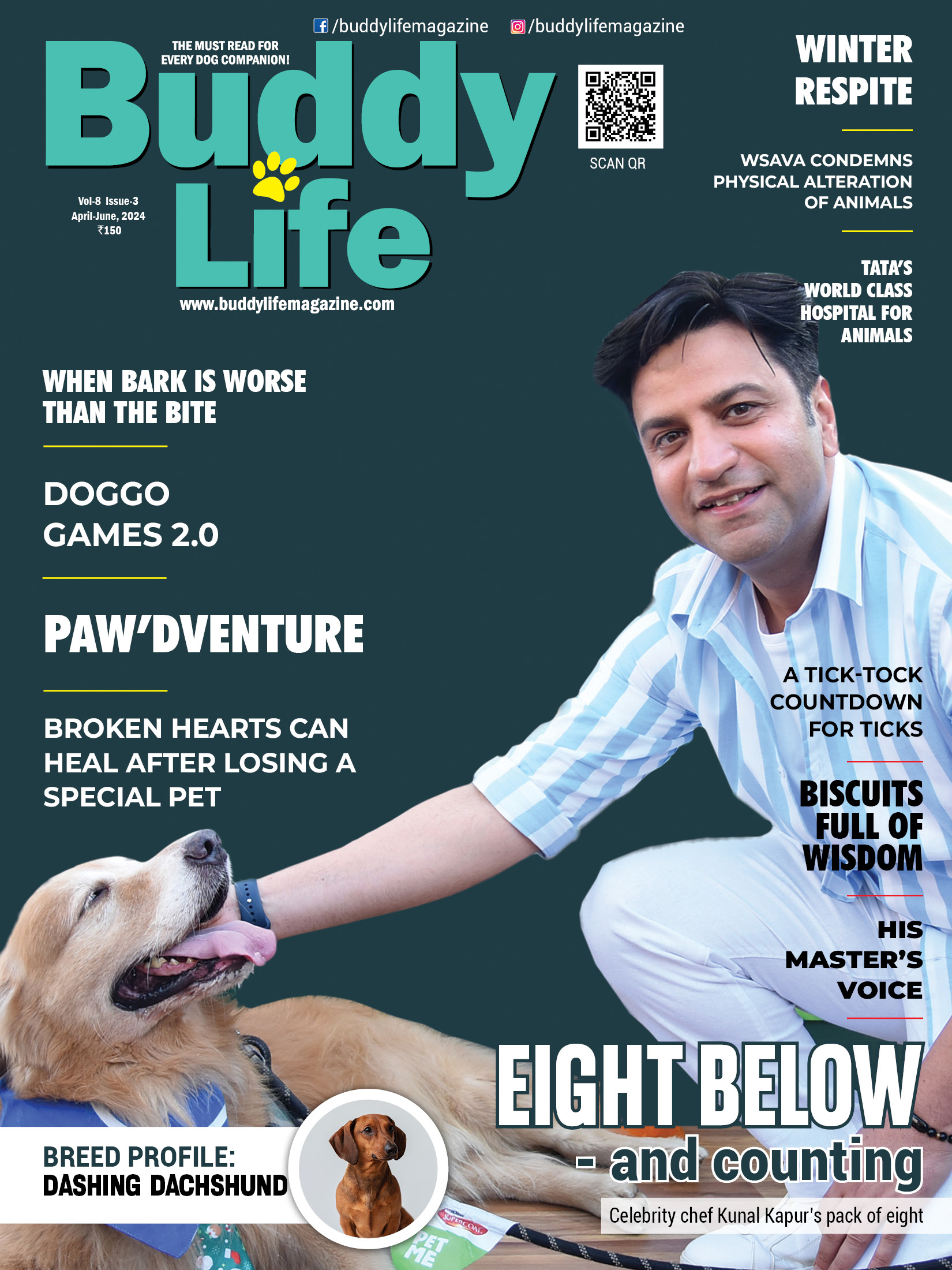
Eight Below – and Counting

Celebrity chef Kunal Kapur’s pack of eight

If you haven’t ever watched (late) Paul Walker’s “Eight Below,” you my friend, have been living in a cave. Every time we (at BuddyLife) watch it, it warms our hearts. If you are a genuine pet lover and haven’t yet watched Eight Below, put this up right at the top of your bucket list.

Meanwhile, not far from home, we chat up celebrity chef Kunal Kapur (a.k.a. KK) who too is a fervent dog lover and has eight dogs! Read on.

BL: We believe that you have as many as eight dogs as pets, which is rather unusual and incredulous. It must be taking some serious time, space and attention portioning skills. How do you manage it?

KK: Having pets is like having kids.

So it’s like having eight kids in your family. But even if there were just one kid, you know, there is no single parent that could take adequate care of the kiddo all by themselves. The entire family has to chip in.

Sometimes you know, you got to talk to your friends, your communities, to kind of come together, to help raise awareness, as well as bring them up in the right manner.

So if I were to say, it’s a one-man job, I’d be lying.

The help should come from within your family or household. Together, make sure the nutrition and health and the emotional well being of your pet is taken care of.

So it’s it’s not something that I do alone. It is something that the entire family comes together for, and takes responsibility of each and every kid that we have (after all they are our fur babies).

BL: You make it sound so easy. Surely it isn’t a mean feat. How do you really deal with eight pets with each of them having a bladder that has a mind of its own? Are there any tricks to managing their bio breaks or, they keep going out and coming in, one after another?

KK: You know, this is kind of interesting.

My first adoption was a stray, and ever since I got him, it was like magic because he was already like a three or a four year old dog. Every time his bladder got full and he had to go out, he would paw the door and I was like, huh, maybe he needs to go out. He’d relieve himself and come back.

Then came the 2nd, and the 3rd adoption at different ages and then others followed on, the youngest of whom being a wee four month old puppy (who obviously you wouldn’t expect to have any bladder control), to our surprise, all of them when they grew to about 9 to 10 months old, they just followed the older one.

They will hold on to their bladder, but they’ll never ever do anything inside the house, even when it’s raining 24/7. Isn’t it magical?

I’ve never had any toilet training problems; really, they go by themselves, they come by themselves. You don’t need to accompany. It’s not as if they’re doing their business somewhere in the middle of the road, they have designated places for it.

If the kiddo is small, obviously there has to be somebody to accompany him. We eventually figured out that rather than everybody go at different times, a pre defined schedule for the whole pack would work better. Morning this time around , everybody wakes up, including all eight of our fur brats.

So we take them out four or five times and make sure that they don’t litter outside of the designated spaces. We pick up every little litter, keeping the outside hygienic, and don’t give anyone a reason to complain about. It has almost become like this system and I did not have to put in a lot of effort training them because they just followed the older dog and they all do the same. I’m telling you, it’s magical!

BL: Wow, it definitely sounds so. How about their other activities? Are all the activities a single group activity or there are multiple groups within, depending on their activity level or age?

KK: I think you correctly put it. Every one of them is an individual and everything isn’t necessarily hunky-dory amongst all of them. It’s like kids quarreling amongst themselves.

Incidentally, one of our dogs is blind from both the eyes and she’s very old. It takes a lot of effort on her part to just walk and she’s somebody who needs care a 100%.

When you take her out, she has to be taken alone, because she just cannot see, but her sense of smell is very heightened. Her sense of hearing too is very heightened. So she knows where to go.

At the same time, there are these two very aggressive younger puppies, so we need to take them separately because they just become this Jai and Veeru (of Sholay) together and then they just go beserk on seeing every other dog! Holding them back becomes an issue sometimes.

I think a lot of times your pets are a reflection of who you are. They imprint.
If you are somebody who is very aggressive, or somebody who’s very dominant, they kind of latch on to your personality a bit as well. I think if you are calm with them, they kind of figure it out that they have to follow a certain line. They have to follow a certain pattern.
Are there days when they do just the reverse and do what they want?

Yes, but does that happen all the time? No.

BL: How about their movement in the house?Do you have a single rule book that applies to all of them, or do you have some rules for, you know, the lapdog kind of smaller dogs, but you don’t allow the bigger dogs on beds or sofas or all of them move about freely and share all the space?

KK: So one of the things that we have done earlier on is that we’ve never chained the dogs. We’ve never confined them to a room. If a guest or somebody is coming to visit us, we say that it is their (our dogs’) house that you’re coming to. So I encourage people that when you come, let them sniff you, let them feel that you are not a threat.

Let them be OK around you.They may just put the their two paws on you and try and be friendly, but let them do that for 5 minutes. Once satisfied, they go their ways.

That’s generally what happens.

And in terms of places, there is this one fellow who is super spoilt and is allowed to go wherever he wants, climb the bed, sofa, etc. But all the others have specific mats which they go back to. Wherever we place the mat, is where the dog will sit.So let’s say if it’s winter, during the daytime, wherever the sunlight is, we’ll place the mat there for them to bask. And because there are different ages, some would play, some would just chill, Occasionally they growl at each other.But you know the good part is rarely, do they bark. It’s only when somebody is at the door or on the sound of the doorbell. They bark basically alerting you. Otherwise they don’t bark at all – and they’re very talkative. They have their own language and they communicate all the time, so that’s something that I enjoy.

BL: Do they ever create a ruckus or pandemonium and when they seem to be out of control?

KK: Yes, definitely.It’s a happy ecosystem, They create chaos every once in a while.The two dominant males try to outdo each other at times, especially if one of the females is in heat.

At such times, you tell them that this is something that is not acceptable, whether it’s by raising your voice, by sending them out of that room, or whether, it’s by sometimes restraining them or yanking their chain just to show them that they have done a bad thing; a tap on the nose with a very stern voice and a stern face too works.They all gather and understand. So yes, there is always a tussle.

BL: We are curious. How do the group dynamics work? Is there an hierarchy amongst the dogs? Is there a pecking order, for example, when one dog is around, the other dogs simply cower away or something like that? Also, do you have a chief troublemaker dog?

KK: There are no enemies. The interesting part is that they feign hostility and growl at each other to assert themselves when the food is being served. But the moment there is a movement outside the house or the doorbell sounds, one dog will dash and all the others follow and then the pack is strong again.

So they may have their differences, but when it comes to guarding the house, they all are together as one. Which kind of defines what brotherhood is. You may be having certain quarrels and you don’t like to see each other. But if there is a problem you stand together as one family. So I kind of admire that.

We haven’t had a case where one is super dominant and one is super submissive. They all have their different zones and things to do and I’m fine with it.You know, you don’t need to get along with everybody all the time, it doesn’t matter so long as you stay in harmony with the others. It’s my house, my rules. That’s what you have to abide by – and they understand that. Chief troublemaker dog you ask? I actually have two of them!

BL: Any interesting anecdote or experience that you might want to share with our readers?

KK: Yes, indeed. Unfortunately a lot of people think of pets as a social status symbol. It’s something that they like to boast about – that I have a certain breed of dog, and it becomes almost like how you flash your new car or a new house or any vacation that you went to – the poor pet becomes a thing to showcase.

You might be putting in a lot of effort in keeping your pet physically fit, but one must remember that there is also an emotional need of the pet. More the time that I spend with them, the better I get connected with them. Sometimes when I have to travel, I can sense a distance growing between us.

You just come back from a seven day tour and they don’t even acknowledge your presence in the same room. So it’s very important that you keep connecting with your dog all the time and it’s very important for their emotional well being.One should make an effort to spend as much time as possible with their pet – not because it’s something to flash, but because it brings you joy. If it’s for flaunting, then I am sorry, you have a pet for a very different reason than what I believe in.

BL: We also have come to know that you feed as many as over 100 strays. How do you manage this?

KK: Yeah. I think this started as something which I used to do where I used to feed dogs just outside my house which was quite straight forward. But when Covid hit, I then had all the time in the world. And that’s when I realized that because there was no movement outside, and mostly stray dogs would eat whatever we would throw as garbage, there was not much of garbage coming. Whatever garbage was coming, may not be very healthy for the strays, and that’s where I started feeding.

Umm, you know, dogs in and around my area where I stay in Delhi, and it so happened that it kind of grew to a number of 50, then to 80, and then to about 100 dogs. I wasn’t counting.

What do you do?

You can’t leave them on the road, Delhi winters especially, can be very harsh. Oh, and then there is this traffic and other elements compounding the challenges, so you help them get adopted. Several accidents routinely occur, where dogs have been run over and nobody takes care.
So, you know, I have made contacts in the right hospitals where you could send them for treatments, or whether it be for their immunization, or whether getting them spayed or neutered. It’s very important that you also take care of the dogs or whichever animals, whether it’s dogs, cats, cows, donkeys or whatever stray animals that you find outside, they all have the right to, you know, dignity and food.

As a kid, I remember when my grandmother used to make any food, especially anything which was Methi or Palak. The stems were never discarded. She used to say, “bachaa kar rakho, kal subah jub gaaey aaegi, toh unhe khilaangey” (Tr: Save the stems, we shall feed it to the feral cows, should they come by tomorrow morning). So I think my entire upbringing has always been to feed animals – just making sure that they are fed.Your waste could be a treasure to somebody else. So I think it just grew from there and today I’m able to do that.

There are multiple organizations that I’m in touch with, who help me or ask for my help.

BL: Would you like to share your experience on how you keep your pets healthy and hygienic and safe?

KK: Yes, another important aspect with keeping pets at home is hygiene. How do you make sure that your floors are clean and hygienically sanitized for yourself, for your kids and for your pets as well? Cleaning the floors happens in my house at least three to four times in a day, minimum three. And when we have time, we’ll do the fourth time as well and that’s because of the sheer magnitude of movement.
I’ve been using ITC Nimyle, which delivers 100% natural actions.
A lot of floor cleaners leave some chemical residue. Not mine. Nimyle does not leave any such chemical residue. As a habit dogs like to lick whatever and wherever they are.

Sometimes their paws, or sometimes there’s food on the floor. They’ll lick it. So it’s safe for them. At the same time, Nimyle is eco-friendly and has the goodness of Neem and it is biodegradable as well. So make sure you are using a product that is safe for your pets as well as for you and your children. Pets at home often climb on your bed, sofa, chairs, literally everywhere. So you’re floor needs to be super duper clean.
Not just be limited to superficial cleaning, be sure to use a proper product that helps you get rid of the germs and the bacteria.

Full disclosure: Kunal Kapur is brand ambassador for ITC Nimyle.