Posted on

Novel Immunotherapy Gives New Lease of Life to a Dog Who had Rare Cancer

Waking up dog’s immune system worked wonders.

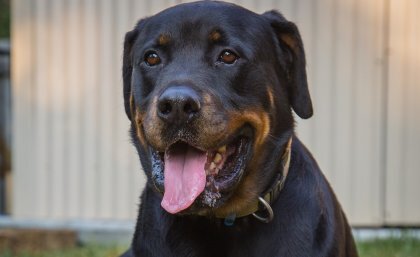
Sydney, January 3, 2020: A novel immunotherapy treatment has saved family dog Griffin from a rare type of cancer, thanks to collaborative research at The University of Queensland. The Rottweiler was diagnosed with T cell lymphoma in December 2017 and given three months to live. UQ’s Dr. Rachel Allavena and her Ph.D. student, veterinarian Dr. Annika Oksa, enrolled Griffin in a medical trial that had helped around 30 percent of dogs suffering from cancer.

Immune system was waked up

“This is a revolutionary step forward in cancer treatment,” Dr. Allavena said. “T cell lymphoma is usually a death sentence for dogs, so Griffin is incredibly lucky to be alive. “Our immunotherapy treatment works by ‘waking up’ the dog’s immune system, helping the animal’s own body destroy the cancer. “It’s very different to the way we’ve treated cancer in the past, where we’ve used surgery, or chemotherapy or radiation, both of which are quite toxic to normal cells. “Chemotherapy was off the table for Griffin, as it would have made his waste poisonous, which would be dangerous since Griffin’s owner, Adam, had a young daughter who played in the backyard.”

Tumor was removed

As per the report published in Phys Org, once a dog is diagnosed with the cancer, the researchers remove a small piece of the tumor and mix it with an adjuvant—a chemical—to bolster the dog’s immune response. “This gets injected with the vaccine over a number of weeks or months; a process that’s very straightforward, much like the regular needles a dog would receive as a puppy,” Dr. Oksa said.

Effective Vaccine

“We then check the dogs very carefully when they visit to see how the cancer is responding to the treatment and make sure they’re doing well.” The researchers have found the vaccine to be extremely safe and easy to administer, with any veterinarian able to do the surgery required to source the tissue for the vaccine. “We’ve treated more than 170 dogs, with no bad side effects in any of them,” Dr. Oksa said. “It’s also safe to do it in combination with other treatments like chemotherapy or radiotherapy. While in some cases, like Griffin’s, it works well by itself. In the meantime, the treatment has been a gift for Griffin’s owner Adam and his family. “It’s great that a medical trial like this exists,” he said.

To read more, subscribe to Buddy Life!

Posted on

Woman’s Pet Dog Helped Detect Her Cancer 3 Different Times

Sierra started acting strange around her owner.

New York, May 27, 2019: It’s no secret that some dogs can detect illness in humans. However, researchers are still figuring out how dogs might help with cancer diagnosis since studies are mixed. Then, there are dogs like Sierra who are naturals at detecting cancer.

Sierra is a Siberian Husky who sniffed out the disease multiple times in her owner, Stephanie Herfel, without any formal training. According to Milwaukee Journal Sentinel, the then-9-month-old puppy came to live with Herfel when her son was deployed for the Air Force. But one day, Sierra started acting strange around her owner.

The Husky reportedly sniffed Herfel’s abdomen so intently that Herfel thought she had spilled something there. The dog repeated the strange behavior before going to hide in the closet as if something had frightened her, reports the Journal. The ordeal “spooked” Herfel enough that she went to the emergency room, where she was told she had an ovarian cyst.

But Herfel’s beloved dog kept hiding in the closet, prompting her to make another appointment—this time with her gynecologist. Herfel had already been dealing with abdominal pain, which also highlighted the potential for a problem.

The former Marine said she was diagnosed with stage 3 ovarian cancer and was undergoing treatment within a matter of weeks. Her trusty pup had been right to be concerned.But smart Sierra didn’t stop protecting her owner with just that occurrence. The dog sniffed out returned bouts of cancer two more times, well before doctors confirmed each case. Sierra even detected the same cancer in a friend who knew she had the disease, reports the Journal Sentinel.


(Story by Fox News)


To read more, subscribe to Buddy Life!

Posted on

Danish Dogs to Receive Virus-Inspired Cancer Vaccine Treatment

Researchers are testing the therapeutic vaccine on dogs with the hope that trials could progress to humans.

London, April 26, 2019: Fifteen Danish dogs with advanced cancer are to receive a new type of therapeutic vaccine which, it is hoped, will rid them of the disease and pave the way for human testing.

Unlike preventative vaccines, therapeutic vaccines are not used to prevent someone from getting a disease but rather to support an immune systemthat is already fighting an invader. This one should trick the dogs’ immune systems into thinking they are under attack by a virus and stimulate a response.

The work is part of international effort to harness the vigorous response that immune systems mount against viruses and redirect it to deal with other types of attack – by bacteria, parasites and some types of cancer. The research is led by Professor Ali Salanti, translational microbiologist at the University of Copenhagen, Denmark and stems from work in a variety of projects including PLACMALVAC.

His team, and others around the world, were intrigued with the success of a new vaccine against cervical cancer and teamed up with Dr. John Schiller from the US National Cancer Institute, who helped develop the vaccine, to explore why it worked.

Cervical cancer is caused by a virus and the vaccine consists of the shell of the virus – known as a capsid – emptied of its genetic material to make it harmless. The capsid is enough to trigger the immune system to build lifelong defences against the infection and therefore to cervical cancer.

Most cancers are not caused by viruses, but both carry markers on their surfaces, known as antigens, which trigger the immune system to make antibodies with which to fight them. However, the problem is that tumours also deploy a range of tactics to evade the immune system and often the body’s response is too weak to attack them effectively.

Prof. Salanti’s group has patented a way of making capsid-like particles from proteins, which can be used to carry molecules such as antigens into the body. To test whether this approach could help against cancer, Prof. Salanti and his team recreated markers found on breast cancer tumours in mice and joined them to the capsid-like particles. They then injected this compound into mice that had been genetically modified to have breast cancer. The mouse immune systems responded as if they were under viral attack, the tumours shrank and, in some cases, disappeared.

(Story by Horizon)

To read more, subscribe to Buddy Life!