Posted on

Iconic Australian working dog may not be part dingo after all

Genetic evidence shows kelpies have no detectable dingo in their DNA.


Sydney, May 31, 2019: Researchers at the University of Sydney have found no genetic evidence that the iconic Australian kelpie shares canine ancestry with a dingo, despite Australian bush myth.The paper, published in the journal Genes, is the first peer-reviewed study of its kind to find that the domestic and wild dogs share no detectable common DNA in genes impacting coat color and ear type.


According to Science Daily, some kelpie owners and “old-timers” in Australia believe the kelpie breed contains genes from the Australian dingo, said Professor Claire Wade in the School of Life and Environmental Sciences.”It has been said that the dingo was mixed with the kelpie, which originally came from Scotland, to produce a more-resilient and hardy dog that could withstand hot, dry Australian conditions,” Professor Wade said.

“Our analysis shows there is no genetic evidence for this from any genes affecting the way the domestic and wild dogs look,” Professor Wade says.Professor Wade, who is an expert in dog genetics, said some people have come to believe there is a connection simply because the two dogs look similar. They both have pricked up ears, a similar body shape and hair texture, and some kelpies are yellow or cream in colour.

“There’s a bit of Australiana and sentiment here,” Professor Wade said. “We wish the Australian kelpie was somehow special or unique to us. But the breed has come from Scotland and the way we made it our own was by selecting it for our harsh climate.”The study characterized known gene variants of both kelpie types (Australian kelpie — conformation; Australian working kelpie — herding) and compared the variants present with those in sequenced Australian dingoes.Genes assessed included identified coat color and ear type variants. None of the coat colour or ear type genes analysed offered support for a shared family history.

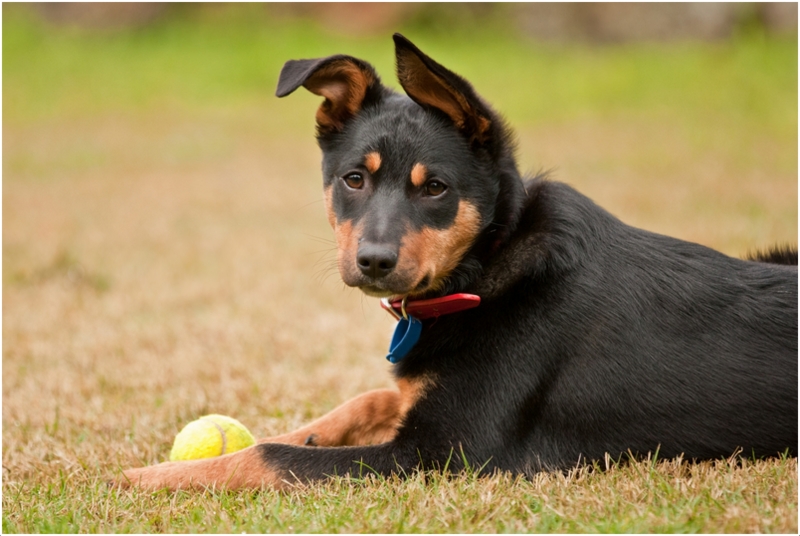
The kelpie was brought to Australia in the late 1800s from Scotland. They are a herding dog derived from the Scottish smooth collie or farm collie. There are two types of kelpies developed in Australia: the working kelpie, which has been selected specifically to handle the Australian climate and working conditions, and the conformational kelpie, which is usually a single colour all-over and is more likely to live in the city.

The best-known Australian kelpie in popular culture is Koko, the dog in the movie Red Dog.Dingoes are believed to have arrived in Australia more than 4000 years ago, most likely with Asian seafarers.The kelpie samples in the research were obtained as part of a larger genetic project helping breeders produce the best possible working dogs. Owners of working kelpies are invited to take part in a survey of current working dogs and their behaviours.

To read more, subscribe to Buddy Life!

Posted on

Australian Dingo is a Unique Species In Its Own Right


leading researchers have confirmed in a new study that the dingo is actually unique.

Following previous analyses of dingo skull and skin specimens to come to the same conclusion, these latest findings provide further evidence of specific characteristics that differentiate dingoes from domestic dogs, feral dogs, and other wild canids such as wolves.

According to a Report published in Science Daily the finding that a dingo is a dingo, and not a dog, offers an opposing view compared to a another recent study that the Government of Western Australia used to justify its attempt to declare the dingo as ‘non-fauna’, which would have given more freedom to landowners to kill them anywhere without a license.

Co-author Professor Corey Bradshaw of Flinders University in South Australia says the classification of dingoes has serious consequences for the fragile ecosystems they inhabit, and state governments are required to develop and implement management strategies for species considered native fauna.

“In fact, dingoes play a vital ecological role in Australia by outcompeting and displacing noxious introduced predators like feral cats and foxes. When dingoes are left alone, there are fewer feral predators eating native marsupials, birds and lizards.”

“Dingoes can also increase profits for cattle graziers, because they target and eat kangaroos that otherwise compete with cattle for grass in semi-arid pasture lands,,” says Professor Bradshaw.

Lead author, Dr Bradley Smith from Central Queensland University, says the scientific status of the dingo has remained contentious, resulting in inconsistency in government policy.

“The dingo has been geographically isolated from all other canids, and genetic mixing driven mainly by human interventions has only been occurring recently,” Dr Smith says.

“Further evidence in support of dingoes being considered a ‘wild type’ capable of surviving in the absence of human intervention and under natural selection is demonstrated by the consistent return of dog-dingo hybrids to a dingo-like canid throughout the Australian mainland and on several islands.”

“We have presented scientifically valid arguments to support the ongoing recognition of the dingo as a distinct species (Canis dingo), as was originally proposed by Meyer in 1793.”

Dr Smith says little evidence exists to support the notion that any canid species are interchangeable with dingoes, despite the fact that most canids can successfully interbreed.

“There is no historical evidence of domestication once the dingo arrived in Australia, and the degree of domestication prior to arrival is uncertain and likely to be low, certainly compared to modern domestic dogs.”

“We show that dingoes have survived in Australia for thousands of years, subject to the rigours of natural selection, thriving in all terrestrial habitats, and largely in the absence of human intervention or aid.

“The dingo is without doubt a native Australian species,” concludes Professor Bradshaw.

To read more, subscribe to Buddy Life!