Posted on

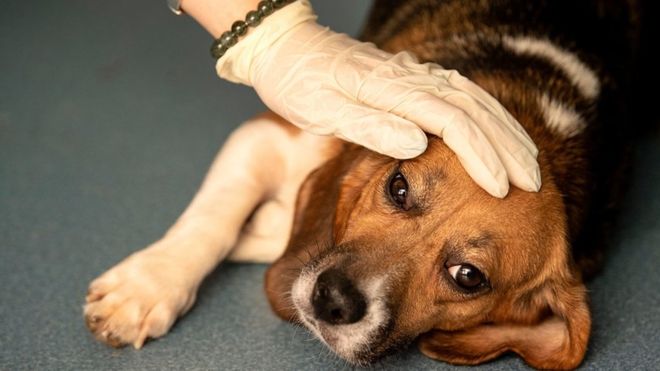
Hot Dog: Checking for Fever

Look for signs like when he doesn’t want to get up to go for a walk, or passes on supervising our every move in the kitchen, you know something is amiss

New Delhi, November 28, 2019: With dogs, it can be hard to tell when they’re not feeling well. And even when you know something’s not right, figuring out the cause is an entirely different challenge!

Know what’s normal:
The most important step in figuring out whether your dog has a fever is knowing his normal temperature. Just like people, with healthy body temperatures ranging from 97.6 to 99.6, dogs’ normal body temperatures vary. Dogs can range anywhere from 100.4 to 102.5. To figure out what’s “normal” for your dog, you’ll need to take his temperature when he’s feeling well, or make a note of it during a routine vet visit (not when he’s sick). Also, temperatures can vary a bit throughout the day. Knowing your dog’s healthy pulse, respiratory rate, and capillary refill time are also handy tools in assessing a potential illness.

Watch for symptoms:
You know what it feels like to have a fever, and your dog feels much the same way. Look for signs like when he doesn’t want to get up to go for a walk, or passes on supervising our every move in the kitchen, you know something is amiss. Glassy-looking eyes and feeling warm to the touch are your next hints, and you can also watch for shivering, panting, runny nose, loss of appetite, decreased energy, and depression. When any combination of these symptoms appears, you should know that it’s time to get out the thermometer.

Taking Temperature:
Get a digital thermometer meant for rectal use and mark it “Dog Thermometer” or keep it somewhere away from your human medicine cabinet. You don’t want a sick family member to accidentally use it in a feverish haze! Measuring your dog’s body heat cannot be accurately gauged by feeling his nose. After lubricating the tip of a digital thermometer with petroleum or water soluble jelly, lift your dog’s tail up and to the side to prevent him from sitting, and carefully insert the thermometer 1⁄2” to 1” into the rectum. Then wait for the thermometer to beep, indicating that it’s registered your dog’s temperature. If your pup’s temperature is higher than normal, it may be time to call your veterinarian.

Causes & Treatment:
Like in humans, your dog’s body runs a fever to fight off infection or inflammation. Anything from an infected cut to a virus … a urinary tract infection to pneumonia… can cause your pet to run a fever – so how do you know when to be really concerned? Our advice is that any fever warrants a call to the vet to let them know what’s going on and get their advice. Temperatures under 103 can generally be monitored at home for up to 24 hours, but anything higher or longer than that requires a trip to the vet. A temperature of 106 degrees or higher can damage a dog’s internal organs and may be fatal, so this is a very serious condition. Other than offering him small amounts of water, talk to your vet before taking any action to reduce your dog’s fever. Giving him aspirin, for example, would prevent the veterinarian from administering other medications that might be more effective in lowering his temperature. If your dog’s fever is serious enough to require a trip to the vet, he will probably be put on IV fluids and receive anti-inflammatory medication. Your vet will also likely suggest blood work to see if provides any insight into what might be causing your pet’s fever. Unfortunately, because so many things can cause fever, it’s often difficult to nail down the culprit.

-Exclusive story by Buddy Life Magazine

To read more, subscribe to Buddy Life!
Posted on

Mystery Illness is Killing Norway Dogs, Experts Clueless

So far 25 dogs have lost their lives.

Oslo, September 8, 2019: Mysterious disease is claiming the lives of Norwegian dogs. Norwegian Food Safety Authority said up to 40 dogs had fallen ill with vomiting and diarrhoea, and several later died. The first cases were in the capital Oslo, and others have since been reported in at least 13 other towns.

According to BBC, the Veterinary Institute said it was unclear if two suspect bacteria types found in autopsies were the cause. Norwegian national broadcaster NRK reports that a total of 25 dogs have died from the condition. However, this has not been confirmed by the Norwegian Food Safety Authority.

A dog in neighbouring Sweden has also been admitted to veterinary hospital after appearing at a show in the Norwegian city of Trondheim, according to Swedish newspaper GT. The Norwegian Veterinary Institute said its pathologists found that three dogs showed signs of a bloody gut, and that it had ruled out common causes like salmonella and rat poison.

Food safety authority spokesman Ole-Herman Tronerud told NRK that the illness seemed “very serious for a dog. But we don’t know yet whether this is contagious or just a series of individual cases”. The agency has advised dog owners to keep animals on a lead in order to avoid contact with other canines.

To read more, subscribe to Buddy Life!

Posted on

Mysterious Dog illness is Plaguing North Carolina

178 cases reported so far.

New York, September 3, 2019: Veterinarians in North Carolina have seen a surge in a mysterious coughing illness in dogs and they’re warning owners to keep an eye out for the signs.Dr. Page Wages has seen an astounding 178 cases in the past month at Care First Animal Hospital.

“I am a little bit worried about this new cough we’re seeing in dogs,” Wages said.And it’s not just one type of cough — there are multiple.”Some (coughs) are quiet. Some are really loud, they sound like a goose, which we usually attribute to kennel cough,” Wages said. “Some coughs are wet, so some dogs are ending up with bronchitis, some with bronchopneumonia, some with full pneumonia.”

According to abc7, a lot of dogs have high fevers and have to be hospitalized. Some have been placed on oxygen, both at Care First and N.C. State. Cases started popping up in late July and early August in dogs who are highly social like those who frequent dog parks, day camps and social spots in downtown Raleigh, N.C.

The highly contagious illness is spread from dog to dog, not to or from humans.Dogs only have to be 10 to 12 centimeters apart to spread it.Dogs tested have shown everything from a common lung infection to bordetella (also known as kennel cough), even in dogs who’ve been given the bordetella vaccine.

Some dogs have gotten more severe cases, called pseudomonas.”Pseudomonas”, Dr. Wages said, “is really, really, really hard to kill.” The severe cases of pseudomonas require a treatment of multiple antibiotics for four to six weeks.No dogs have died of this mysterious illness yet, but Wages says it’s possible, especially since some dogs had to be placed on oxygen.

Animal experts are calling this “Canine Upper Respiratory Infectious Disease. Nobody really knows,” Wages says. “It’s not just here. We’ve seen a lot of cases in the downtown Raleigh area, but Wake Forest has it, Winston Salem is seeing it and there are reported cases in Alabama. So, it’s everywhere, somewhere.”

Dogs who’ve been given bordetella and influenza vaccines don’t have as severe of symptoms, but Dr. Wages is begging dog owners not to take your dogs to dog parks or day camps or social spots for a few weeks until the cycle can be broken.
If your dog has an unusual cough Dr. Wages urges you to call your veterinarian.

To read more, subscribe to Buddy Life!

Posted on

Beware if Your Dog Licks Your Lips

Both you and your pet could be struck down with illness.

London, May 5, 2019: It is hard to resist when your cuddly mutt shows affection, especially when it licks your face and lips. But no matter what, you must not let your dog reach your face, nor if a recent research is to be believed.

According to a recent finding licky dog can actually spread a great deal of antibiotic-resistant bacteria to your mouth, and that’s never good news. Dogs don’t brush their teeth everyday, and so their mouths harbor a lot of bacteria, much of it harmful to humans. Hence letting your dog kiss you on the lips could be really bad for your health.

Scientists at Glasgow Caledonian University discovered that allowing dogs to kiss or lick your face or eat from your plate increases the chance of spreading ¬antibiotic-resistant bugs between species.Both you and your pet could be struck down with illnesses that can’t be treated with antibiotics, as the rise in antibiotic resistant bacteria leads to more and more superbugs in the UK.Health psychologist Dr Adele Dickson, who led the research, said to media “This close contact could potentially put adults, children and the pets themselves at risk of transferring bugs that are resistant to antibiotics through saliva.

To read more, subscribe to Buddy Life!